


By Xavier Kong

In this part of the Bitcoin series, KiniBiz explores the security options and safety measures available in the cryptocurrency world.
____________________________________________________________________
One of the reasons authorities are suspicious of Bitcoin and other altcoin is due to the point that these cryptocurrencies note untraceable transactions as part of their capabilities. This, of course, leads to suspicions that the currency may be used in criminal activities, such as to launder money or to finance acts of terror.
 To be fair, these worries are on the minds of the people in the altcoin community as well. However, they are looking into ways and means to lower or eradicate the ways altcoin can be used to commit crimes. Among the practices include KYC, AML, and CTF measures. What are these? KiniBiz asked, and KiniBiz received.
Know Your Customer (KYC) refers to the process by which financial institutions are required to perform to identify their customers, usually via proof of identity like a credit card number, driver’s licence, or IC number. This in turn validates the account of the customer.
But would this not violate the point about anonymous transactions using Bitcoin?
“Bitcoin was never truly anonymous to begin with. Yes, there are multiple public keys, but the block chain tracks the Bitcoin. It’s all pseudonymity, rather than anonymity. What with everyone monitoring the block chain, large transactions immediately trigger flags in the community,” said Antony Lewis, from the Singaporean exchange itBit.
A blog written by Fergal Reid and Martin Harrigan from University College Dublin had results on their research on whether or not Bitcoin was anonymous, and what they came up with was this:
“Bitcoin is not inherently anonymous. It may be possible to conduct transactions is such a way so as to obscure your identity, but, in many cases, users and their transactions can be identified.”
Anti-money laundering works in the same vein, by affirming the identity of a customer, exchanges will be able to identify red flags better in the event of a large transaction of Bitcoin from one wallet to another, or if a large amount of Bitcoin was used to acquire a large amount of fiat currency.
 One particular example is the United States, where Bitcoin exchanges have been termed “money service businesses”, which means that the exchanges are now subject to the same scrutiny as banks with regards to anti-money laundering and counter terrorism financing (CTF) laws. Canada recently followed this move in February, with “plans to introduce legislative amendments and regulations to strengthen current standards and improve Canada’s compliance with international standards” according to the Financial Post.
“Among the changes are “anti-money laundering and anti-terrorist financing regulations for virtual currencies such as Bitcoin,” according to its 2014 Budget document,” noted the report.
Antimoneylaunderinglaw.com had more to say on this, noting that “the proposed legislation will aim at eliminating, rather than reducing the financial crime risks, which suggests that businesses involved in the exchange of bitcoin will become “reporting entities” under the Proceeds of Crime (Money Laundering) and Terrorist Financing Act, similar to money services businesses”.
One of the questions that KiniBiz fielded to people in the community is this: Can Bitcoin be hacked, considering it is a form of cryptography, and all codes can be broken eventually? KiniBiz was immediately given a very strong assurance that this was not possible at the time.
“To hack Bitcoin, you will need more processing power than is available right now. Basically, what you need is a quantum processor. However, with that amount of processing power, one might be better off putting it to a different use,” said Vincent Hoong, chief financial officer of BTC.sx, a Bitcoin exchange in Singapore.
“It’ll be akin to robbing Bank Negara Malaysia with the full might of the United States military. The cost-benefit ratio would show that it is just not worth the effort to crack Bitcoin like that,” Hoong added, with Adam Giles of Brain Control.me concurring.
 “With that much processing power (with a quantum processor), you might as well target banks, as they all have a higher market cap than Bitcoin,” said Giles.
Bitcoin.org also answered the question of whether or not Bitcoin is vulnerable to quantum computing, and here is their answer:
“Yes, most systems relying on cryptography in general are, including traditional banking systems. However, quantum computers don’t yet exist and probably won’t for a while. In the event that quantum computing could be an imminent threat to Bitcoin, the protocol could be upgraded to use post-quantum algorithms. Given the importance that this update would have, it can be safely expected that it would be highly reviewed by developers and adopted by all Bitcoin users.”
But wait, hadn’t Mt Gox had its Bitcoin stolen before? What about all the cases where altcoin have been stolen?
“Now that is a security issue that has nothing to do with Bitcoin’s encryption. Rather, it has to do with the encryption that is used as security,” noted Lewis.
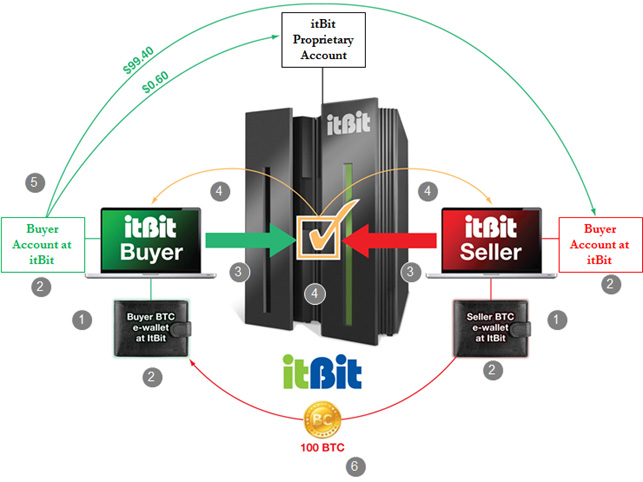 “For example, at itBit, what we do is that we have a computer, not connected to any other device and in a room where access is limited to only a few people, where transactions are performed once a day. While this may make it cumbersome to get at your Bitcoin quickly, it does increase the security of the currency,” added Lewis.
But beyond trusting the exchanges, how can users of Bitcoin improve the security of their cryptocurrency?
One method is wallet security, such as the methods used by Brain Control.me, which KiniBiz had explained in Part 2 of this issue. Another such provider is Crypton Security Sdn Bhd, which provides a way to secure Bitcoin transactions, by using a mobile-specific app that reads a QR code meant only for the owner’s device. This, in turn, ensures that the only person who can access the wallet is the owner of the wallet.
“Of course, there’s always the use of common sense. Don’t leave your valuables where others can take them,” said Akati Consulting chief executive officer Krishna Rajagopal.
 On the May 14, 2014, KiniBiz received word that Dogevault, an online wallet service for Dogecoin, had shut down its server, denying access to a lot of people who have Dogecoin with them. At the same time, a lot of users reported that their Dogecoin have been removed from their wallets without their authority. This leads to the conclusion that Dogevault had been robbed. Site administration have announced that they are investigating, and will release a statement within the next 48 hours.
Below is the announcement on the site:
On the 11th of May, the Doge Vault online wallet service was compromised by attackers, resulting in a service disruption and tampering with wallet funds.
As soon as the administrator of Doge Vault was alerted, the service was halted. The attackers had already accessed and destroyed all data on the hosted virtual machines.
We are currently in the process of identifying the extent of the attack and potential impact on user’s funds. This involves salvaging existing wallet data from an off-site backup. We will also closely be investigating potential attack vectors, and determining the security breach which enabled the attackers to compromise the service.
Please do not transfer any funds to Doge Vault addresses while our investigation is under way.
Thank you for your patience – we will issue an additional statement including our findings and plan of action within the next 24-48 hours.
Email support@dogevault.com for any enquiries.
Doge Vault.
In the next part, KiniBiz takes a look at the potential Bitcoin may have as a currency of the future.
Yesterday: How far has altcoin gone?
Tomorrow: Will an altcoin be the global currency of the future?
You must be logged in to post a comment.