


By Xavier Kong
 In the previous part, KiniBiz explored what Bitcoin is, who started it, as well as the means of obtaining it. In this part, KiniBiz takes a look at how much altcoin has penetrated the Malaysian, Singaporean, and Indonesian communities, as well as the rules and regulations of Bitcoin in the region.
____________________________________________________________________
Bitcoin, along with its other altcoin siblings is proving to truly be a global phenomenon. Even here in Southeast Asia, there have been talks and discussions of altcoin, with groups of people forming miner pools as well.
In Malaysia alone, there is a thriving Bitcoin community, centered around the website BitcoinMalaysia.com, which was founded by Colbert Low, and reports on news about the cryptocurrency in Malaysia, as well as becoming a nexus for interested parties to either find out more about the cryptocurrency, invest or trade, or even just to meet fellow enthusiasts. The website also maintains a sister thread on local forum Lowyat.net.

Mark Smalley
The advent of Bitcoin in Malaysia has, of course, brought along with it the startup of businesses or ideas that cater either to the cryptocurrency, or to its supporting mechanisms. Among the startups is Brain Control.me, started by Mark Smalley here in Malaysia, that carries the tagline “Store and send Bitcoin from your brain!”.
The innovation here deals with the security behind using Bitcoin. While a Bitcoin wallet generally involves a string of digits and letters that form part of the key to the wallet, Brain Control.me makes it so that the algorithms to create that key are based solely on a combination of passwords predetermined beforehand.
“This way, the only way to get at your Bitcoin, is through your own brain,” said Mark Smalley, founder of the startup.
The country also has two Bitcoin vending machines, with one located in Penang and the other in Bangsar, that allow users to purchase Bitcoin. The machines were launched earlier this year by Numoni Pte Ltd, a Singapore-based company, who expects to have 10 such automatic vending machines (AVMs) in Malaysia by the end of 2014.
Malaysia also sees, just this past Sunday, the opening of the first food and beverage outlet that accepts Bitcoin as payment in Malaysia, Nasi Dagang Capital in Damansara Uptown, which also happens to be the weekly haunt of the site’s weekly Bitcoin meetups.
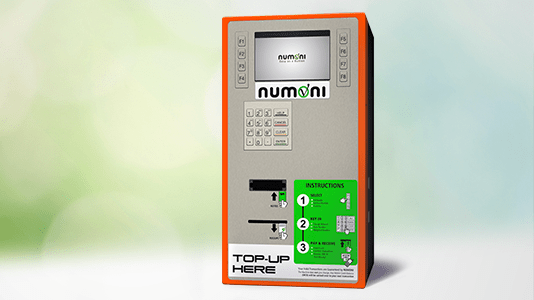 Singapore sees its share of Bitcoin as well, with exchanges like itBit allowing traders, investors, and enthusiasts in Singapore to buy and sell Bitcoin with the rest of the world. Startups there include Numoni Pte Ltd, as mentioned above, as well as Tembusu Terminals Pte Ltd, both of which are providing altcoin vending machines to the island nation.
Also from Singapore is startup Coinpip by Anson Zeall, who organises Boost parties for the cryptocurrency, in order to spread awareness of its uses. Among the locations of such events include Hong Kong, Singapore, and Malaysia.
“The key to reducing volatility is to accelerate adoption,” said Zeall during the World Bitcoin Conference held in Malaysia recently. Among the ideas put forward by Zeall included the formation of partnerships between major merchants and startups to form a whole ecosystem, which would increase awareness and understanding of the crypto-currency and its uses.

Tiyo Triyanto
In Indonesia, the Bitcoin community has organised itself into pools, one of which is run by Tiyo Triyanto, who also founded said community, and is now the chief executive officer of the Krakatau Mining Company in Indonesia.
“The community is large, but the trading volume is still low,” said Bitcoin.co.id founder and chief executive officer Oscar Darmawan, adding that the community there represents a “large potential market”.
The founder of the Indonesian exchange also expects Bitcoin kiosks to be available in Jakarta from mid-May 2014, though classified as a drink vending machine due to the legislation in Indonesia.
However, one of the issues faced by the country’s community is the lack of awareness and understanding of the cryptocurrency, and this has caused a multitude of challenges for the community, including the “lack of education about the potential usage of Bitcoin in daily life”.
According to Alexander Wiyono, a member of the Indonesian mining community, the cryptocurrency can do a world of good.
“More than 67 Bitcoin, with a value of about US$60 000 then, was raised by the Bitcoin community to aid in Typhoon Haiyan victims in the Philippines. Each donation was so small they were termed ‘micro-donations’. However, since there were so many, the amount became quite substantial,” said Wiyono, citing this report by CNNMoney.
Legality
 To date, while Bitcoin and other altcoin are being traded in Malaysia, Bank Negara Malaysia has made a clear statement regarding the institution’s thoughts on Bitcoin and virtual currency, with the statement clearly noting that the national bank does not recognise Bitcoin as legal tender in Malaysia, and issued a warning to users of such currencies that any risk is borne solely by the owner. However, there haven’t been any visible attempts or declarations that the national bank will forbid the trade of the currency in Malaysia.
Southwards in the city-state, the Monetary Authority of Singapore had, in September 2013, issued a statement that warns users of the risks associated with Bitcoin, with a spokesperson from the authority stating that “If Bitcoin ceases to operate, there may not be an identifiable party responsible for refunding their monies or for them to seek recourse,”
In December 2013, the authority made another statement noting that it will not intervene with any businesses that decide to utilise the virtual currency as a means of transacting goods and services, in keeping with the stance of the island’s government that the authority will not regulate virtual currencies.
In January 2014, however, the city-state’s monetary authority recognized the cryptocurrency, and provided guidance to businesses and merchants that utilised the cryptocurrency as to how they should handle taxation on transactions.
 According to an email that was sent to Singapore based Bitcoin brokering service Coin Republic, companies that buy and sell Bitcoin will be taxed based on the gains from their sales of the currency, but if the Bitcoin was part of the company’s investment portfolio, they were not taxable.
With regards to the goods and services tax (GST) in Singapore, well, here’s the list:
“The sale (including the exchange) of bitcoins in return for a consideration in money or in kind is a taxable supply of services subject to GST. If the seller is a GST-registered person, he would have to account for output tax on the sale of bitcoins made in the course or furtherance of his business. “
“Where bitcoins are accepted as payment for real goods or services (e.g. digitized items like online music), such transactions are treated as a barter exchange. GST should be accounted for on the individual supplies made (i.e. the supply of bitcoins and the supply of real goods or services) if the parties involved are GST-registered persons. However if the bitcoins are used to exchange for virtual goods or services within the virtual gaming world, as a concession, the supply of bitcoins will not be taxed until the bitcoins are exchanged for real monies, goods or services.”
“As bitcoin does not fall within the definition of ‘money’ or ‘currency’ under the GST Act, a supply of bitcoins is not a supply of money and would not be disregarded for GST purposes. The supply of bitcoins would be treated as a supply of services as it involves the granting of the interest in or right over the bitcoins.”
“The GST treatment of the supply of bitcoins will depend on whether the company is acting as an agent or principal in the transaction. If the company merely facilitates and is acting as an agent in the bitcoin trade (e.g. bitcoin exchange transfer bitcoins directly to the customer’s wallet), GST is chargeable only on the commission fees received. However if the company is acting as a principal in the bitcoin trade (e.g. buys and onward sells bitcoins to the customer), GST is chargeable on the full amount received, i.e. the sale of bitcoins and commission fees. “
“Under section 13(4) of the GST Act, a supply of services shall be treated as made in another country if the supplier belongs in that other country. In this case, if the company belongs outside Singapore (i.e. there is no business or fixed establishment in Singapore), the supply of bitcoins shall be treated as made outside Singapore. Accordingly, GST is not chargeable on the supply of services (i.e. bitcoins) made outside Singapore. “
“Overall, the GST treatment of bitcoins will depend on the business arrangement and contractual terms between the parties involved. “
 David Moskowitz, of Coin Republic, noted that “the guidance which IRAS laid out is rational and well thought out.”
Over in Indonesia, however, the trading of Bitcoin and other altcoin is restricted by the government. Initially, Bank Indonesia had said in December 2013 that the currency may be a potential payment method, but could potentially be used in scams and money laundering operations, considering the currency is not regulated by banks.
However, in January 2014, the national bank changed its stance, with the deputy governor noting that the usage of Bitcoin would break a number of laws in the country, including the law that states the Rupiah is the only legal tender in the nation. Also noted was that the Bank had also admitted that it did not have any detailed policies in place to govern Bitcoin, nor any specific rule to bar its use as a mode of payment, and are studying the virtual currency alongside Indonesia’s Ministry of Communications and Information.
Following that, in February 2014, Bank Indonesia released a statement noting that Bitcoin and other altcoin were not recognized as currencies or legal tender in Indonesia. The statement also warned users that the risks were to be borne by the owner.
It appears the primary concern among the banks is the risk of fraud and other crimes using cryptocurrencies. In the next part, KiniBiz takes a look at what the communities are doing to lower the risk of crime using cryptocurrencies, as well as other security measures.
Yesterday: What is Bitcoin?
Tomorrow: Security, safety and encryption.
You must be logged in to post a comment.