


By P. Gunasegaram
 Tiger is always sad when any company which has an associated logo suffers. Tiger supposes it is commiseration but really, does Malayan Banking have serious problems as a result of a loss of some key people? Perhaps, but effects are not likely to linger if the right measures are taken swiftly. But will the Tiger bank do it?
Tiger has followed Malayan Banking, closely over the years from 1978 when he became a cub reporter. It’s a bank which has produced major luminaries – two central bank governors, two ministers and rival bankers.
As far as Tiger can recall, no other bank has produced even one central bank governor or one minister, so that’s a huge credit to the bank. But it was not without blemish. Allow Tiger some indulgence and let him recount some interesting history.

Khoo Teck Puat
It was a Malaysian Chinese businessman Khoo Teck Puat who founded Malayan Banking back in 1960. Tiger was eight then but he knows because he read up. Khoo left the OCBC group, strong Singapore-based bankers, because he thought they were not moving fast enough in Malaysia, then Malaya, newly independent from Britain in 1957.
The idea was to take banking to the rural areas and to liberate Malaysia from the stranglehold of foreign British banks. Malayan Banking did this admirably, becoming the largest bank in terms of branches by 1966.
And then trouble started. Alleged mismanagement was said to be the cause of a run on the bank which required a rescue from the central bank, Bank Negara Malaysia. Khoo was ousted as CEO but remained as director and shareholder for a while. Malayan Banking became government-owned.
Khoo moved on to buy a stake in Standard Chartered Bank, helping to prevent the bank from being taken over by Lloyds. However he was linked to the National Bank of Brunei scandal where directors were accused of siphoning money out of the bank. One of his sons went to jail. Khoo died in 2004 in Singapore where he became more noted as a hotelier.

Teh Hong Piow (left) & Khoo Kay Peng
Khoo’s proteges in Malayan Banking Teh Hong Piow and Khoo Kay Peng (no relation) also left at the same time. Teh formed Public Bank, now the third largest bank in terms of assets in Malaysia. Kay Peng became general manager of Bank Bumiputra in 1965 and subsequently ventured into business with Malayan United Industries or MUI. He eventually took over little Kwong Lee Bank from Sarawak in 1983, renamed it MUI Bank. But in 1994 he relinquished control to Quek Leng Chan’s Hong Leong group apparently because he backed the wrong horse (Tengku Razaleigh Hamzah) in politics. The bank is now known as Hong Leong Bank.
Meantime, a former officer at Bank Negara who had started an accounting firm, Azman Hashim, came in as executive director at Maybank in 1966. He remained there for one and half decades up to about 1980. Azman will be later known as the person who led Arab Malaysian group into fame and fortune and was the best investment banker in his time.
From the 1970s onwards Malayan Banking competed for top position with Bank Bumiputra, which after three failures was folded into what is now CIMB Group, currently, Maybank’s main competitor.

Amirsham Abdul Aziz (left) & Abdul Wahid Omar
In the intervening period, Maybank thrived, survived the Asian financial crisis admirably and produced two central bank governors – Jaffar Hussein and Ahmad Mohd Dom – and two ministers – Amirsham Abdul Aziz, and lately Abdul Wahid Omar. So, Maybank certainly has a great pedigree, something which would make a Tiger proud.
Fast forward to now – and a mini-crisis awaits the bank. Tiger chooses its words carefully – it’s a mini-crisis, not a full-blown one. For Malayan Banking, despite the inflated price it paid for its Indonesian operations some time back, is thriving and well.
As one rival banker put it – it has a large balance sheet and solid recurrent income. Or to put it more bluntly, most of Maybank’s business comes from lending. It does not depend very much on fee income which is the mainstay of investment banking.

Tengku Zafrul Tengku Aziz
So the loss of Tengku Zafrul Tengku Aziz as CEO of the investment banking arm, Maybank Investment Bank, and two others while significant will not be anywhere near crippling because the investment banking business forms under eight per cent of profit for the latest half year as this article points out.
The other resignation is Bank Internasional Indonesia (BII) head Khairussaleh Ramli, who reports say is headed for RHB Bank. That is also not very significant because BII accounts for less than 7% of group profit. Nearly 70% of Maybank’s profit still comes from Malaysia with a further 15% from Singapore.
But it is important to remember that both investment banking and Indonesia account for nearly 15% of profit and that is not small. To suddenly lose two CEOs here is still a setback, especially for the investment bank where Tengku Zafrul has done much to increase Maybank’s profile.
Maybank’s investment banking business has not kept pace in the past. Tiger remembers the days when Aseambankers, the forerunner to Maybank Investment Bank, used to to be regularly among the top with Bank Bumiputra’s Bumiputra Merchant Bankers but it slipped subsequently. Efforts to revitalise this did not bear much fruit until Tengku Zafrul came along.

Khairussaleh Ramli
But sometimes there can be only one Tiger on the hill. Both Tengku Zafrul and Khairussaleh were contenders for the top post at Maybank but it eventually went to deputy president and head of global wholesale banking Abdul Farid Alias. That means a long wait for the former two.
The winner in this round at least is CIMB Group whose CEO Nazir Razak pounced Tiger-like to get Tengku Zafrul to head the investment banking and fund management business. Nazir, the deal maker can now rest a bit easier as he he has got a good deal maker in. And he can add to the list of potential successors to him which is said to number five now with Tengku Zafrul on board.
Without a merger, it is unlikely that CIMB is going to be able to shake Maybank’s position as the top consumer bank in the country but with Tengku Zafrul, Nazir has solidified CIMB’s lead in investment banking. That may be small victory without some push in consumer banking in future.
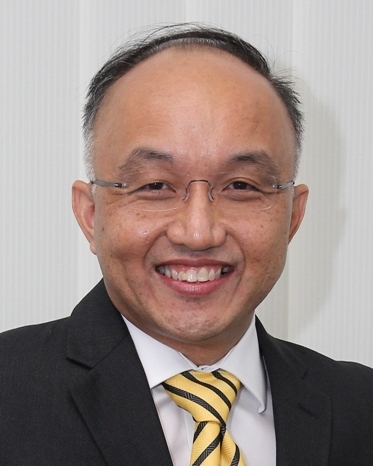
John Chong
For Maybank, there is need for them to get some cubs in place with the departure of two tigers but at least in investment banking there already seems to be one in John Chong who is now acting head of investment banking. He is not quite a cub though with 20 years experience under his belt.
Other considerations should be put aside and Chong, who is said to enjoy Tengku Zafrul’s confidence according to Tiger’s sources, should be given a chance to prove his worth after two decades.
In Indonesia, the right move would probably be to get a capable Indonesian to run operations. To head international operations perhaps Maybank should look to some of those responsible for running their Singapore operations, which account for some 15% of pre-tax profit. Maybank has done well to compete in Singapore against some of the biggest international names there.
Whatever it is, Maybank must act with speed and agility, which is the mark of a Tiger. Unfortunately they took a long time earlier when it took some three months to name an internal candidate as CEO to succeed Wahid. That kept eligible tigers under claw-chomping suspense and others to head-hunt them.
Is it any wonder they left in half the time taken to choose their new CEO? That shows how fast the likes of CIMB and RHB are moving these days. Really a Tiger worth its salt simply has to be faster – or else it loses its prey and goes hungry.
GRRRRRR!
You must be logged in to post a comment.