


By Chan Quan Min
 Slick marketing, catchy phrases and the promise of a great lifestyle combined with prestige and ever more demanding performance coupled with comfort are the hallmarks of the perfect campaign to penetrate and dominate the high-end car segment in Malaysia. It is a very lucrative market with high margins as rewards for those who succeed.
______________________________________________________________________
Accountants can be terribly unsexy when it comes to motor vehicles. Buying a car is a notoriously bad investment, warned an accountant once, when dispensing financial advice. Stripped down, a car is simply a means to get around and worse, a depreciating asset unlike other material possessions such as property.
 Common knowledge says a newly purchased car does not hold or keep its value. Instead, its resale value decreases with each scratch, dent and passing day.
Given the hard truth, luxury automakers should be thoroughly congratulated for having disassociated their respective brands from such images of utility.
Luxury car brands meticulously cultivate a slick, irresistible image to position their product line-up as objects of desire. In response, Malaysian car buyers who have the means to part with the expense often go out of their way to purchase one.
Although in Malaysia the luxury car segment is only a small slice of the overall pie, the high end of the market is comparatively much more profitable. And where there is money to be made, competition can be severe.
Either BMW or Mercedes-Benz comes to mind when asked to name a luxury automaker, or even perhaps both of them. Both German automakers dominate the local market but increasingly other makes are rolling off the tongues of the well heeled.
And snapping at the heels of the entrenched rivals from Munich and Stuttgart are another two European makers of luxury vehicles, Audi and Volvo. The once dull Audi and Volvo, since rejuvenated, are appealing to a segment of the market the big two seem to have sidelined in recent years – yuppies.
In this week’s series we take a daring look at the ever-competitive luxury car market. Make no mistake, this is not an advertorial as most auto write-ups these days are. Paid ads will not pit one rival against another for fear of losing valuable ad income but KiniBiz has no such fear.
 Tomorrow and the day after, in the second and third part of this series respectively we scrutinise the close rivalry between BMW and Mercedes-Benz and to a lesser but growing extent, Audi. We speak to both Gerhard Pils and Roland Folger the respective heads of BMW and Mercedes’ locally incorporated units for an inside look at the industry.
Finally, the fourth part of this series will explore the recent phenomena of the ‘hot hatch’. Luxury carmakers are only just reluctantly stretching their price range downwards into a more competitive segment, introducing more compact and cheaper vehicles than their current offerings. How will this battle play out? Could serious competition result in a cannibalisation of sales?
Lowering prices only cheapens the brand
Luxury vehicles are the eponymous ‘Veblen good’ in economic theory. Veblen goods are consumer products that do not respond to price fluctuations in a typical manner.
For instance, when prices for high-status goods such as luxury vehicles increase they become even more attractive to consumers, because higher prices signify exclusivity.
Similarly, lowering prices for Veblen goods degrades the status of the product to the point of reducing consumer demand for the particular product.
From a marketing perspective, the difference between mass-market and luxury automobile brands is significant. Mass-market brands promote their cars based on price and features, while luxury brands are not quite as pragmatic.
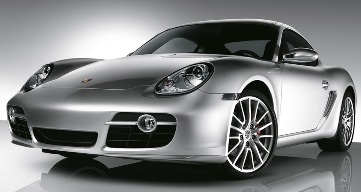 Luxury brands work hard at grooming a certain level of prestige, exclusiveness and quality of construction beyond that of mass-market brands.
The result: at the high end of the market, profit margins are fat, often approaching if not already in the double digits. Reliable data for the local market is unavailable but international sales and earnings data should provide a close guide.
A recent survey by the Centre for Automotive Research at Duisberg-Essen University crowned Porsche as the most profitable car manufacturer in the world.
Among international car manufacturers Porsche wins the race comfortably, skimming off an average profit of 18.4% off the showroom price according to Centre for Automotive Research data quoted by the German language magazine Autobild.
BMW and Mercedes-Benz, by far the two most popular brands in Malaysia are also known for regularly posting industry topping profit margins. In an August statement, Munich-based BMW AG reported second-quarter pre-tax profit margins of approximately 10.6%.
Stuttgart-based Mercedes-Benz, a unit of parent company Daimler AG, according to various international news sources posted disappointing return on sales of 3.3% in the first-quarter, down from 7.1% for the whole of 2012.
In comparison, mass-market brands typically post razor thin profit margins of between 2% – 5%, relying on sales volume to drive both revenue and profit.
Costly but still in demand
Given substantially higher vehicle prices due to an unpopular regime of excise duties and sales taxes, it is surprising to note Malaysia remains the largest luxury car market by absolute volume in Southeast Asia. Thailand and Indonesia follow closely behind despite substantially larger populations.
Our neighbours will need to do some serious catching up if they are to surpass us. Sales of luxury vehicles have been expanding at double-digit rates, and at a far quicker pace than the growth in the overall passenger car market.
 Just over half a million, 552,189 to be exact, new passenger vehicles were registered and let loose on Malaysian roads in 2012. Of this number, 16,392 or 2.97% belonged to one of the top luxury car marques by sales volume; Audi, BMW, Lexus, Mercedes-Benz, MINI, Porsche or Volvo.
A year before in 2011, the share of luxury vehicles was just under a quarter of a percentage point lower at 2.73% of the passenger vehicle market. In 2010, the luxury vehicle share was lower still at 2.07%.
Going back yet another year, to 2009, the luxury vehicle share was just 1.87% of the total passenger vehicle market. All numbers quoted above were extracted from Malaysian Automotive Association (MAA) reports.
At this rate, there is no reason to doubt sales of luxury vehicles will continue to account for an increasing share of passenger vehicle sales. Year-to-date sales figures for this year appear to point towards a luxury vehicle share above 2012’s.
Perhaps even more stunning are the market leading positions held by luxury car makes in affluent Singapore.
 Singapore’s best selling car for the first three quarters this year is Mercedes-Benz with just under 17% of the market. BMW follows closely behind just a tenth of a percentage point under Mercedes.
The island state, like Malaysia, is also a costly place to own a car, but higher incomes of at least three-fold that of Malaysia’s urban wage earners could explain the extreme popularity of BMW and Mercedes-Benz there. Of course other factors such a tax system that flattens the prices of all vehicles contributes too.
Back to home ground. Although the market for luxury cars in Malaysia continues to expand, the field is getting increasingly crowded with eager new competitors.
It is no surprise certain models of luxury car makes are becoming commonplace on our streets. Take for instance the BMW 3-Series. Prospective buyers of a new set of wheels, people familiar with the industry say, are looking for something to set themselves apart from others.
Not a minute too late the luxury car market has in recent years seen a massive widening of product offerings in the form of new models, engine configurations and customisable extras.
Not to forget, recent years have seen the rise of previously unpopular luxury makes eager to break the BMW – Mercedes-Benz duopoly.
 It is understood that this year alone, the battle of the ‘hot hatch’ has led both BMW and Mercedes-Benz to introduce hatchback models below the RM200,000 mark.
The ultimate winner from the more competitive environment this year is certainly the consumer. There has not been as many choices in terms of price, make and model as there is now.
If international experience is any indication, the battle is only just heating up.
In the US market, luxury carmakers fight a war of attrition to win over customers. Sometimes, the fight can spill over to the creative field. Case in point, the witty billboard war between BMW and Audi.
BMW overtakes Mercedes-Benz
Mercedes-Benz may have started off in pole position in this country with an uninterrupted presence in this country since before independence but it could have taken its lead for granted.
For the first time last year, rival BMW overtook Mercedes-Benz in sales volume, prompting a concerted response from Mercedes.
Thus far, BMW has managed to cling on to its hard-won lead. Mercedes-Benz, however, is not one to let up easily. Recent reports suggest Mercedes has clawed back some gains to narrow the gap with BMW following a 15.6% increase in sales this third-quarter.
The first part of this series ends here with the discussion continuing in tomorrow’s issue. On a fresh page tomorrow, we take an in-depth look into the BMW – Mercedes-Benz rivalry and throw into the mix an up-and-coming third player.
Tomorrow: BMW – Mercedes – Bitter fight for market share
You must be logged in to post a comment.