


By Stephanie Jacob
 Low-cost airline AirAsia Bhd has vigorously denied that it did not consolidate its associates’ accounts so as to paint a rosier profit picture as alleged by independent Hong Kong-based research firm GMT. In this article, KINIBIZ looks at who is right as far as this is concerned.
______________________________________________________________________
 From the time Hong Kong-based research house GMT Research released its “sell” report on low-cost carrier AirAsia Bhd, the latter has seen its share price plummeted about 18.8% from RM2.02 on June 10, 2015, the date the report was released, to RM1.64 at the close of trading on June 23.
The report was written by Gillem Tulloch, who is the founder of GMT, and titled ‘New Dog, Old Tricks’. GMT reserved its reports exclusively for its paying customers but Tulloch has released a video which highlighted some of the key points of it.
He highlighted a range of issues both at the parent company level and in its associates, especially in Indonesia and the Philippines. Key among them were allegations of questionable accounting practices and corporate governance abuses.
He believes these factors justified downgrading the airline stock and has advised his clients to “sell” or “short” AirAsia. With the airline’s fair value seen as being less than RM1.23 per share.
This is not the first time that GMT has trained its guns on a listed company. Previously, it was in the limelight over questioning of the energy and metals trader Noble Group’s accounting practices earlier this year. GMT’s report questioned Noble’s method of booking debt and profit from projects not yet in production.
What are GMT Research’s grouses with AirAsia?

Gillem Tulloch
In the video on AirAsia, Tulloch said: “We think that AirAsia is creating profits and operating cash flow by abusing its associates.” He called the process “gaming the associates” and said: “AirAsia’s group structure looks designed to remit profits and cash at the operating level to the parent company from airline associates.”
Doing this allows AirAsia to pad up its financials but comes at the expense of the associates, said Tulloch. According to him, AirAsia generated RM603 million from leasing aircraft to its associates and another RM466 million in other income from activities such as selling aircraft to them at a profit in financial year 2014.
The around RM1.1 billion in lease and other income from associates boosted AirAsia’s profits by 39%, he said.
“In some years, AirAsia made more money-selling stuff to its associates than it did flying people around Asia. Unfortunately we have arrived at the stage where these arrangements do not look sustainable anymore,” he added.
He added the method which has worked so far is now starting to fail, as its associates, particularly Indonesia AirAsia (IAA) and AirAsia Philippines (AAP), are loss making and have exhausted their shareholders equity.
Left pocket into right pocket accounting?
Tulloch noted that in 2014, associates used RM726 million of AirAsia’s working capital and that the latter extended further loans of RM431 million to the associates. Had it not made the loan, then the associates might have used up even more of AirAsia’s working capital.
“In other words, it looks like AirAsia was extending loans to its associates which were then coming back as profits and operating cash flow. Given that as AirAsia only generated RM300 million in operating cash flows last year, without this loan there might have been outflows of RM100 million,” said Tulloch.
Although this type of accounting processes are not illegal, Tulloch said he “regarded the opaque structure as representing poor corporate governance and is evocative of the crony capitalism from before the 1997 Asian financial crisis”.
Tulloch suggested that AirAsia is probably unwilling to unwind these practices and consolidate the accounts of its associates because of the own financial situation which he said is dire. He opined that AirAsia itself needs “a thorough recapitalisation and restructuring”, to the tune of a RM7 billion capital injection to deal with its own issues.
We want to, but cannot consolidate
For its part, AirAsia has strongly refuted Tulloch’s claims and in particular his accusations that there had been accounting gimmicks and corporate government abuses by the airline.

Tony Fernandes
The airline’s founder and group chief executive officer Tony Fernandes said AirAsia has always had a good reputation for being transparent, whether it has to do with its financials or in the aftermath of the QZ8501 Indonesian crash.
“The fact that they could question our accounting is because we are so transparent. We disclose so much information. Because we put so much information, I think they could create some of these stuff.
“We are audited by PricewaterhouseCoopers (PwC) and our disclosures are full. We have always wanted to consolidate but because of aviation regulations, it is difficult to consolidate. But we are putting out our proforma consolidation,” Fernandes said.
In a press statement on June 22, the chairman of the airline’s audit committee VU Kumar said the committee along with the board of directors and management of the airline were “somewhat distressed and peeved to have been accused of corporate governance abuses and condoning accounting gimmicks”.
According to Kumar, the airline had wanted to consolidate the accounts of its associates for a while now, but was prevented from doing so by the differing aviation laws in the various countries, which its associates operate in.
Local aviation laws in Indonesia, Thailand, and India state that a foreign entity cannot hold more than a 49% stake in an airline company, while in the Philippines the limit for foreign ownership is set at 40%.
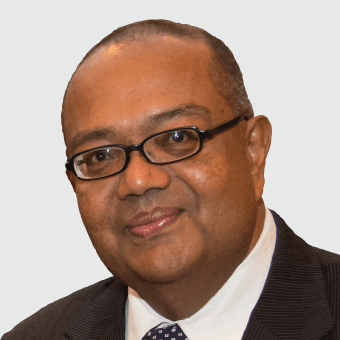
VU Kumar
Kumar said AirAsia was “of the clear opinion that it should consolidate its associate companies. It has for at least over 12 months, had a whole series of meetings with PwC, legal advisers, management of the associate companies, and aviation regulators to effect consolidation of its associate companies”.
“AirAsia Bhd has expressed a clear view to PwC that it is exposed to or has rights to variable returns from its involvement with its associate companies. In fact, it is involved to the extent that AirAsia does affect the returns over its associate companies.
“AirAsia believes this is a critical criteria and the raison for consolidation of associate companies. It should, therefore, be allowed to consolidate its associate companies as it does reflect the actual performance and financial position of AirAsia,” he said.
He emphasised that the meetings were not just discussions, but said they were “supported by board papers and opinions from our auditors and legal advisers from the territories in which the associate companies operate”.
However, he explained, “power in practice is, however, not legal control”. And although AirAsia has control in substance over the associate companies, given the equity limits in place, it “cannot have legal control or legal power over its associate companies”.
Any attempt for AirAsia to gain legal control over the associates would result in them losing their airline operating licences. And because AirAsia does not have legal control over the associates, its auditors PwC has advised that there should be no consolidation.
The accounting standard under which this issue is evaluated against is the MFRS10 (Consolidated Financial Statements Accounting Standard).
So despite AirAsia wanting to consolidate, Kumar said: “PwC has, however, taken the strict interpretation of power in MFRS10… Its view is power in substance is insufficient to meet the criteria for consolidation, as such substantive power can be withdrawn at anytime by the associate companies.”
Therefore, contrary to GMT’s allegations that AirAsia does not want to consolidate its accounts, the latter’s hands are, in fact, tied, as doing so would have resulted in an audit qualification, added Kumar.
 According to sources, AirAsia had approached the Securities Commission (SC) to allow it to issue a set of pro forma consolidated financial statements. However, SC initially did not grant permission as it believed two sets of accounts would cause confusion for investors.
In a statement to Bursa following the sharp decline in its share price, the airline explained that until its first quarter for financial year 2015 (1Q15) results, the profits and losses were being taken into account via the equity accounting method permitted by regulators. However, from 2Q15 onwards, the airline will start to include pro forma consolidated results.
“We recognise that we are to operate as one big economic entity because of the intertwined nature of our business. The company has been trying to get the auditors and regulators to allow it to consolidate. This has just not been possible but as mentioned before to the investment community, the second quarter will see the company including a pro forma consolidation,” said the statement.
AirAsia has a lot of cash and assets
Fernandes also dismissed GMT Research’s concerns over the airline’s cash flows because AirAsia has significant cash and assets.
“He only puts all the negatives (in the report), he does not put all the positives, all the assets. What I am highlighting is, AirAsia has a lot of cash and assets that we could (utilise) if we wanted to, such as the leasebacks.
 “We also have investments in Expedia, in Tune Insurance, which are all very valuable. So the report just highlighted one part, but it did not highlight all the potential cash we can get.
“We are not going to do it, we are not changing our plans because of the report. But I just want to highlight, we own 128 planes right? We could sell those planes and generate US$1 billion (RM3.74 billion) in cash.
“We could sell Expedia or sell Tune Insurance. I do not want to, because I feel there is a lot of value in there. But this is just to highlight that you can always paint one side of the picture, so I am just equalising it out,” he said at a press briefing in Paris in conjunction with the airshow there.
Fernandes is confident that at the end of the day, AirAsia will prove its sceptics wrong.
“No point in me talking, just let me do it. Then we will see who is right. I think our record speaks for itself… I think the main message is, despite everything that is happening we are going to have a record year in profits,” he said.
With regards to IAA and AAP operations, Fernandes said there would be a three-step process to deal with the debt and capital issues. The first is to raise capital from existing shareholders, followed by a bond issuance for US$300 million to reduce debt to the parent company and finally to list the airlines in their respective countries.
Should the bond raising exercise be successful the proceeds will be used to cut the debt owed by about half, said Fernandes. The remainder of the debt will then be paid off through cash flow. AirAsia may also choose to capitalise some of the debt pre-IPO to maintain its its current 49% stake in IAA and 40% stake in AAP, he added.
It certainly does not look like AirAsia planned to put off consolidation to fix the accounts and, in fact, tried very hard to make consolidation a reality. In that part at least, GMT appears to have got it wrong.
Tomorrow: Is AirAsia in trouble?
You must be logged in to post a comment.