


By Samantha Joseph
 Asian markets were mostly down Tuesday, after four straight days of losses on Wall Street. The markets were weighed down partly from concerns about the expected US Federal Reserve’s reeling-in of the stimulus programme, international media outlets reported.
The Malaysian ringgit fell to a three-year low, at 3.3 to the dollar and local stocks reported nearly 2% in losses. Traders expect further weakening of the ringgit, and one of the main concerns of investors has been the increasing government indebtedness. The FBM KLCI closed today at 1745.4, down 1.85%, continuing a downward trend from last week and a fall from yesterday’s 1778.4.
Japan’s Nikkei, Sydney, Jakarta and Hong Kong all registered losses, while Shanghai and Seoul have shown mixed results. Stock markets in India and Indonesia fell, with the rupee charting a record low of 63.30 per dollar and Indonesia’s rupiah at a four-year low.
The Thai baht fell to a one-year low with an unexpected 0.3% decrease in GDP, forcing the government to announce that Thailand is entering a small recession. In 1997, the collapse of the Thai baht started off the Asian financial crisis that spread across the region in a domino effect, affecting Malaysia, Indonesia, the Philippines, South Korea and Japan.
Bloomberg reported Voravan Tarapoom, the Bangkok-based chief executive officer of BBL Asset Management Co, noting that Thai economic growth may slow further in the third quarter as domestic consumption and exports are very weak.
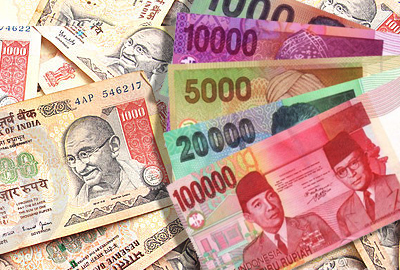 India’s Sensex tumbled to an 11-month low as the rupee fell to 64.12 per dollar. UBS AG observed that a further drop in the rupee to 70 per dollar was possible considering India’s slow growth and a cautious market preparing for the paring down of the US stimulus package.
Indonesia also witnessed a fall in their rupiah, charting 10 728 per dollar recently, its weakest form since April 2009. Bloomberg observed that Indonesia’s shares went down at the fastest pace worldwide this quarter. At the same time, their reserves declined to US$92.7 billion, down by US$5.4 billion last month.
Their stocks plunged by 20%, the biggest four-day fall since 2008, and researchers at PT BNI Securities Jakarta have pointed out that many investors are fleeing in the face of weighing Indonesia’s inflation and the unfavourable exchange rate against potential benefits.
This situation is a confluence of several factors, said Yeah Kim Leng, Group Chief Economist of RAM Holdings.

Yeah Kim Leng
“One is the increased likelihood of the stimulus tapering, given economic indicators that the US economy is firming up and has ignited speculation that the stimulus will end sooner rather than later,” he said. This has led to an increased reversal of cashflow from emerging markets to US dollar assets.
“There’s also the fact that the economic performances of emerging countries, including BRIC, have been below expectations. There is also some concern over the current account deficit in Indonesia and India.”
Yeah expects export-oriented economies like Malaysia’s to do better in general, although we will also be affected by the risk aversion pullout from emerging countries.
“Given Malaysia’s strong domestic liquidity and healthy domestic fundamentals, we should be able to cope with the outflows and the market that is expected to be volatile until the stimulus is at it’s end,” he added. “Should the ringgit weaken further, it would help to boost exports and avoid concern of deterioration.”
You must be logged in to post a comment.