


By KINIBIZ
 There were contenders aplenty for this category but the Johor Sultan’s controversial land deals takes the cake. Not only did the consequent developments from the land sales threaten to throw a spanner in Iskandar Malaysia’s works but some of the land weren’t even quite land yet when they were sold.
Other contenders include the off-on-off-on-don’t-know-when Selangor water deal because of its lack of clarity, a couple of deals involving 1Malaysia Development Bhd or 1MDB and Sime Darby’s Papua New Guinea venture, which may turn out sour. The last is also a contender for best deal — depending on how risks pan out.
The Johor Sultan’s land deal however still comes on top because of its potential for upsetting the Iskandar apple cart, its size and scale which magnifies effects on the market, and last but far from least the sheer audacity of it.
______________________________________________________________________
Johor Sultan’s RM4.5 billion land sale

Sultan Ibrahim Ismail
Although the deal was sealed at the tail end of last year, the Johor Sultan’s RM4.5 billion sale of prime land to Chinese developers Guangzhou R&F still stole the headlines this year, often for the wrong reasons.
The deal was unprecedented and stunned market observers. Royalty selling prime, freehold land to foreign companies at such a massive scale was unheard of. A substantial portion of the 116 acres of land sold at the waterfront of Johor Bahru (JB) were yet to be reclaimed.
In essence, the Chinese developers had paid billions for land but some of which wasn’t quite land yet.
The land deal was the Chinese developer’s entry into the Iskandar region. Within just six months of the purchase, Guangzhou R&F had launched the first phase of its high-rise condo project right across the Johor-Singapore causeway.
Very soon there was a backlash against the Johor Sultan, partially triggered by the proposal of Johor’s new Housing and Real Property Board Bill that was to give the Johor Sultan sweeping executive powers in the property industry.
 The Bill was subsequently shelved due to a public uproar and many point to the Sultan’s RM4.5 billion land deal as a reason for the very vocal opposition — by the public and both sides of the political divide — to extending the Sultan’s powers in the state’s land matters.
There were also concerns that selling prime state land to China was a politically insensitive move. Singapore has already expressed its concern to Putrajaya over the large-scale reclamation of land in JB and its possible impact on the environment.
The Sultan’s RM4.5 billion deal also ruffled the feathers of local developers who are worried that the local market could be swamped with units, thus causing a property glut.
Ironically, the Johor Sultan’s massive land deal could backfire on Iskandar, given that property launches in the region are already struggling due to the slowdown in the property market.
— By Khairul Khalid
Other contenders:
Selangor’s water crisis drags on
 When the Selangor and federal governments announced a memorandum of understanding (MoU) early in the year to end the state’s long standing water restructuring saga, many breathed a collective sigh of relief.
The MoU promised a RM9.7 billion takeover of the four water concessionaires — Syabas (Syarikat Bekalan Air Selangor), Puncak Niaga, Splash (Syarikat Pengeluar Air Selangor), and Abbas — that was supposed to pave the way for the state to regain full control of water assets and operations after more than six years of wrangling.
It proved to be a false dawn. Instead, water negotiations lurched into more turmoil.
The state and federal governments were criticised for being secretive about the MoU’s details. Former Selangor Menteri Besar (MB) Abdul Khalid Ibrahim’s sudden support for Putrajaya’s controversial RM9 billion Langat 2 water treatment plant (packaged together as part of the MoU) that was previously deemed expensive and unnecessary, cast doubts. The MoU was seen as lopsided, in favour of Putrajaya.

Abdul Khalid Ibrahim
Following an impasse with the concessionnaires, the federal government triggered the Water Services Industry Act (WSIA) that allowed for the forced takeover of the water assets. Still, the state and Putrajaya dithered. Both parties started sending conflicting signals.
Khalid maintained his tough stance, affirming that Selangor would have full control of water assets. Putrajaya, on the other hand, was still insisting on a “willing-buyer, willing-seller” deal with the concessionaires, even after WSIA was declared. It seemed more interested in pushing the Langat 2 deal through, instead of securing the state takeover of water assets.
In the meantime, Selangor was flirting with disaster. Water levels at the dams were at critical levels. A prolonged drought and water rationing made residents anxious. Many businesses held out from investing in the state due to the water problems. Khalid was eventually ousted by his own party after the contentious “Kajang Move”.
New Selangor MB Azmin Ali is now pressuring Putrajaya to reveal details of its agreement with the Khalid administration, which it has seen fit to classify under OSA (Official Secrets Act).
— By Khairul Khalid
Malaysia’s rice bowl in one man’s hands
 In mid-April this year, Padiberas Nasional Bhd (Bernas) was taken private by that man Syed Mokhtar Albukhary, who gave Putrajaya a letter promising to safeguard the country’s national interests as far as rice, a staple food for Malaysians, is concerned.
But the paradox is that allowing one businessperson to have a monopoly on such a basic, crucial food item would be far from anyone’s idea of safeguarding national interest.
To recap, Bernas is already the sole national rice importer — until year 2021 at least, given the concession was renewed in 2011. As a private entity now, however, the Malaysian rice-eating public can no longer check what Bernas is doing to ensure they are not getting screwed over.
Adding to the bad taste of the deal was a public statement by Agriculture and Agro-based Industry Minister Ismail Sabri Yaakob claiming that Bernas had provided a written pledge saying the delisting is only temporary until a corporate restructuring is completed.

Syed Mokhtar Al-Bukhary
Ismail further said that National Farmers Organisation (Nafas) and National Fishermen’s Association (Nekmat), who had 4.7% and 4.3% shareholding respectively in Bernas, would profit tremendously from exiting Bernas and will be substantial shareholders once Bernas is relisted post-restructuring.
“After the completion (of the restructuring), Bernas will be relisted on Bursa Malaysia, with Nafas and Nekmat each getting 5% shareholding in the company, which is more than before,” he told reporters in November last year. “The question now, delist or not, Bernas’ pledge to the government is maintained. They also promise to guard the interests of farmers, the agreed minimum price of paddy, guard the interests of the Bumiputera rice millers besides managing the subsidies by the government. All these promises will be kept.”
However, one week after the privatisation bid was announced the board of directors of Bernas informed Bursa Malaysia that it is “not aware of any written arrangement (that involves) any corporate restructuring that includes an impending relisting plan; and where Nafas and Nekmat will eventually hold a 5% stake each in the newly listed entity.”
In other words, Bernas had just directly contradicted what a federal minister said to the press. What is really going on? It is amazing how little we know about such an important issue as far as national interests are concerned.
— By Khairie Hisyam
Track 4A, an award steeped in controversy
 When news broke in mid-May this year that Project 4A (or Track 4A), a new combined cycle gas turbine power plant in Johor valued at between RM11 billion and RM13 billion was awarded through direct negotiations to a consortium comprising Tenaga Nasional Bhd, Johor Sultan’s vehicle SIPP Energy Sdn Bhd, and YTL Power International Bhd instead of via an open tender, the industry was naturally upset.
This was because the deal was the second time the government broke its 2005 policy of awarding new power projects via open tender, which KiniBiz later wrote about in September. The first such deal was the award of a 50 megawatt (MW) solar power plant project in Kedah to 1Malaysia Development Bhd (1MDB), however it was Track 4A (a 1000MW- 1400MW plant) that incurred the wrath of the industry for reasons outlined below.
 After the news broke, the Energy Commission chairperson Abdul Razak Abdul Majid claimed that the Track 4A and 4B power plant projects would be awarded via open tender. However, the Energy Commission reneged on its promise and instead announced in late May that it had awarded Track 4A via direct negotiations to fast-track the planting up of the plant. The following month, the Energy, Green Technology and Water Ministry released a statement defending its decision, saying that the ministry applies three concepts for new power plants, namely competitive bidding, selective tender, and direct negotiations.
KiniBiz also finds it strange that the Energy Commission had accepted the technology promoted by YTL Power for Track 4A when it had not accepted the company’s technology for Project 3B, which was eventually awarded to 1MDB, although that award was carried out via competitive bidding.
All in all, the controversy surrounding Track 4A left a bad taste in industry players’ mouths and was the biggest wake-up call that the Energy Commission’s pledge for power reforms meant little if nothing.
— By G. Sharmila
Petronas threatens to delay RM29 bil Canadian project
 The standoff between Petroliam Nasional Bhd (Petronas) and the Canadian government threatened to derail the RM29 billion liquefied natural gas (LNG) shipping terminal project (known as Pacific Northwest LNG) in the province of British Columbia.
At the crux of the matter was British Columbia’s tax regime, which Petronas insisted should be lowered to make the project more viable for foreign investors. Petronas leads the project with a 62% stake.
Petronas CEO Shamsul Azhar Abbas warned that it would delay the terminal, slated to start operations in 2018, until at least 2030 if British Columbia couldn’t give assurances of better financial incentives. In response, the British Columbia government dismissed Shamsul’s statements as mere posturing in the negotiations.
 Can Petronas really afford to delay or even pull out of the project? Although it tried to give the impression that it had the upper hand, in reality Petronas’ hands were already tied. In 2012, Petronas acquired Canada’s Progress Energy Resources for US$5 billion (RM17 billion) giving it ownership of shale gas properties in northeastern British Columbia.
Central to that acquisition is the shipping terminal to export the shale gas around the world. Without the terminal, Petronas would not be able to maximise its Progress Energy deal.
Shouldn’t Petronas have settled issues about taxes and other pertinent policies with the Canadian government before diving into the shale gas market in Canada and buying Progress Energy for such a big sum?
Although British Columbia and Petronas have since seemed to resolve their differences with the announcement of a tax cut for the project, the long-term viability of Petronas’ massive investment in shale gas remains to be seen, especially considering plunging crude oil prices in recent months.
— By Khairul Khalid
1MDB’s power-ful offensive gains pace
 Strategic investment fund 1Malaysia Development Bhd (1MDB) had been on a roll this year, bagging power projects left, right, and centre. By all appearances the fund’s stable of 16 power assets in six countries looks set to grow.
There was the Track 3B power project worth RM11 billion for two 1,000 MW coal-fired plants, which 1MDB won in February through competitive bidding after edging out close competitor YTL Power International. But this may have also been the last open bidding process for a power plant project, with the next award — Track 4A discussed above — was given through direct negotiations.
After Track 3B, 1MDB gained a direct award of a 50 MW solar project from the Energy Commission (EC).
But what takes the cake is a 2,000 MW gas turbine power plant project in Melaka awarded to 1MDB directly — surprisingly some seven years ahead of the plant’s commissioning date.
 This raised eyebrows as, in seven years, plenty of technological advancements can happen that in turn would reduce power generation costs. In contrast such an early award would lock in the rates at today’s cost base, which may lead to higher cost than necessary when the plant starts contributing to the national power supply.
So why such an early award and through direct award no less? If the award does not lock in the rates immediately then the implication is worse as it would be unclear on what basis the award was given.
And that was not all — in October a news report surfaced of 1MDB being tipped to bag two of three new power plants in Sabah, which incidentally is the home state of Maximus Ongkili – the Energy, Green Technology and Water (Kettha) Minister.
One of the power plants is said to be part of 1MDB’s power assets listing prospectus — which was earlier mooted for end-2014 but now expected to happen early next year — to be submitted to the Securities Commission in October.
In July Reuters reported that the initial public offering (IPO) is expected to raise nearly RM10 billion and this figure may well rise if 1MDB is beefing up on power assets, either already existing or yet-to-be commissioned. A report in end-November place the value at about RM11 billion.
Are the direct awards a deliberate move to beef up 1MDB’s IPO? Too much is unclear, but the Malaysian public can only wonder if such a concerted effort for 1MDB’s sake is not at the expense of the larger national interest.
— By Khairie Hisyam
In Papua New Guinea, Sime Darby eyes promised land
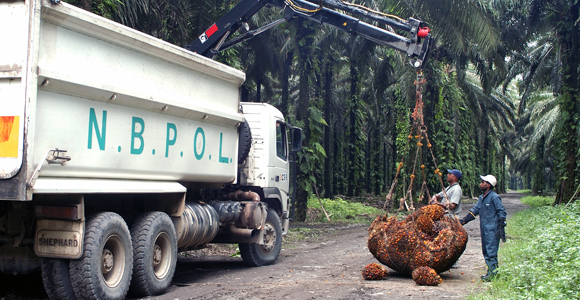 Sime Darby’s high-profile takeover bid for New Britain Palm Oil Ltd (NBPOL) is a dual-entry in this issue series, for both best and worst deals, given there are two sides of the coin as far as its pros and cons are concerned.
Sime Darby offered RM5.6 billion to take over NBPOL, which is a hefty 85% premium to the company’s last closing price on the London Stock Exchange and some 10% higher than NBPOL’s own fair value as noted by its board last year.
So what makes it such a potentially bad deal? The risks hanging over Sime Darby with regards to this particular purchase are too great to ignore.
For all the potential benefits discussed in the previous part of this series, what must be remembered that they are simply, at this point, mere potential. In other words, Sime Darby still needs proper execution and some amount of fortune to reap the rewards.
By Sime Darby chief Mohd Bakke Salleh’s own admission, the conglomerate is paying a hefty premium for NBPOL, justifying this by highlighting the strategic benefits down the road through the doors NBPOL can open for the group.
 Among others, Sime Darby will have a foothold in Papua New Guinea, a region noted worldwide as being especially fertile for palm oil cultivation, as well as having acquired a strong brand name in NBPOL that is well-established in Europe, which in turn will strengthen Sime Darby’s pole position in the larger market.
That said, NBPOL’s margins are actually less than Sime Darby’s own plantation division at present.
In presenting their valuation to justify the premium for NBPOL, Sime Darby presumed a number of variables — such as high fresh fruit bunches (FFB) yield, high oil extraction rate (OER) and long-term crude palm oil (CPO) prices to trend between RM2,930-RM3,256 per metric tonne as per the historical range over the past five years — to be constant.
Yet plantation is a volatile industry subject to cyclical trends and uncontrollable factors such as the weather, as seen in the recent slump in CPO prices that saw prices dip below RM2,000 per tonne for the first time in five years. That uncertainty is without even considering the volatile political landscape of Papua New Guinea itself, which despite the current government’s backing for Sime Darby, raises the spectre of a shift in sentiment should there be a change in government.
Overall while this particular investment has its promises for Sime Darby in the long run, that timeframe is very long-term and many things can happen along the way. One ill-fortune may be enough to derail the entire premise on which Sime Darby’s investment was made.
— By Khairie Hisyam
The generous Delloyd takeover offer that wasn’t
 In May, Delloyd Ventures Bhd shareholders were informed that the company’s major shareholder, CEO and managing director Tee Boon Kee and family, wants to take the company private, offering RM4.80 per share to buy everyone else out. With the stock languishing below RM4 for years before the offer, it seemed a great deal.
But was it? A quick examination of the company’s latest annual report found that Delloyd Ventures’ assets may be grossly undervalued.
In particular, the company has a freehold 1,448.78 ha palm oil estate in Batang Berjuntai, Kuala Selangor — called the Sungai Rambai Estate — that has a book value of RM75.23 million, being acquired in 1999. However a cross-check with recent transacted prices from the National Property Information Centre (Napic), Finance Ministry, showed that palm oil land nearby had been transacted for much higher prices in 2010 and 2011.

Tee Boon Kee
Going by the latest transacted prices, Sungai Rambai estate may actually be worth up to RM2 billion, a far cry from the book value stated in the annual report. After taking away RM75.2 billion in book value, the net value per share of this particular asset alone comes to a staggering RM20 per Delloyd Ventures share.
And this is just one of Delloyd’s list of properties, many of which appear to be out of date as far as valuation goes. At publication time the exercise is pending approval from the Securities Commission, for which application was submitted in September.
In any case, as in many other takeovers, generosity is relative and in Delloyd Ventures’ case, this apparently generous offer may mask the fact that shareholders, if they accept, would be letting gems go for peanuts.
— By Khairie Hisyam
You must be logged in to post a comment.