


By Khairul Khalid
 Is property still an attractive investment option, considering that the market is apparently slowing down this year? Despite high prices and tight financing, industry observers say that patient investors could still get some good deals.
______________________________________________________________________
Traditionally, property has been one of Malaysians’ favoured mode of investments — with a relatively small outlay for the down payment, the investor can potentially control an investment worth ten times the outlay.
“A property investment doubles up as a home as well as a store of wealth. The same can’t be said about other investments such as shares or bonds,” said a market observer.
But with the property market experiencing a slowdown this year after three to four years of breakneck growth, will investors’ attentions shift elsewhere?
Consolidation period
The property market is undergoing a consolidation period of sorts this year, after seeing prices soaring to record highs for the previous two to three years. Although for many investing in property is still worthwhile, recent market developments have put the brakes on speculative activities.
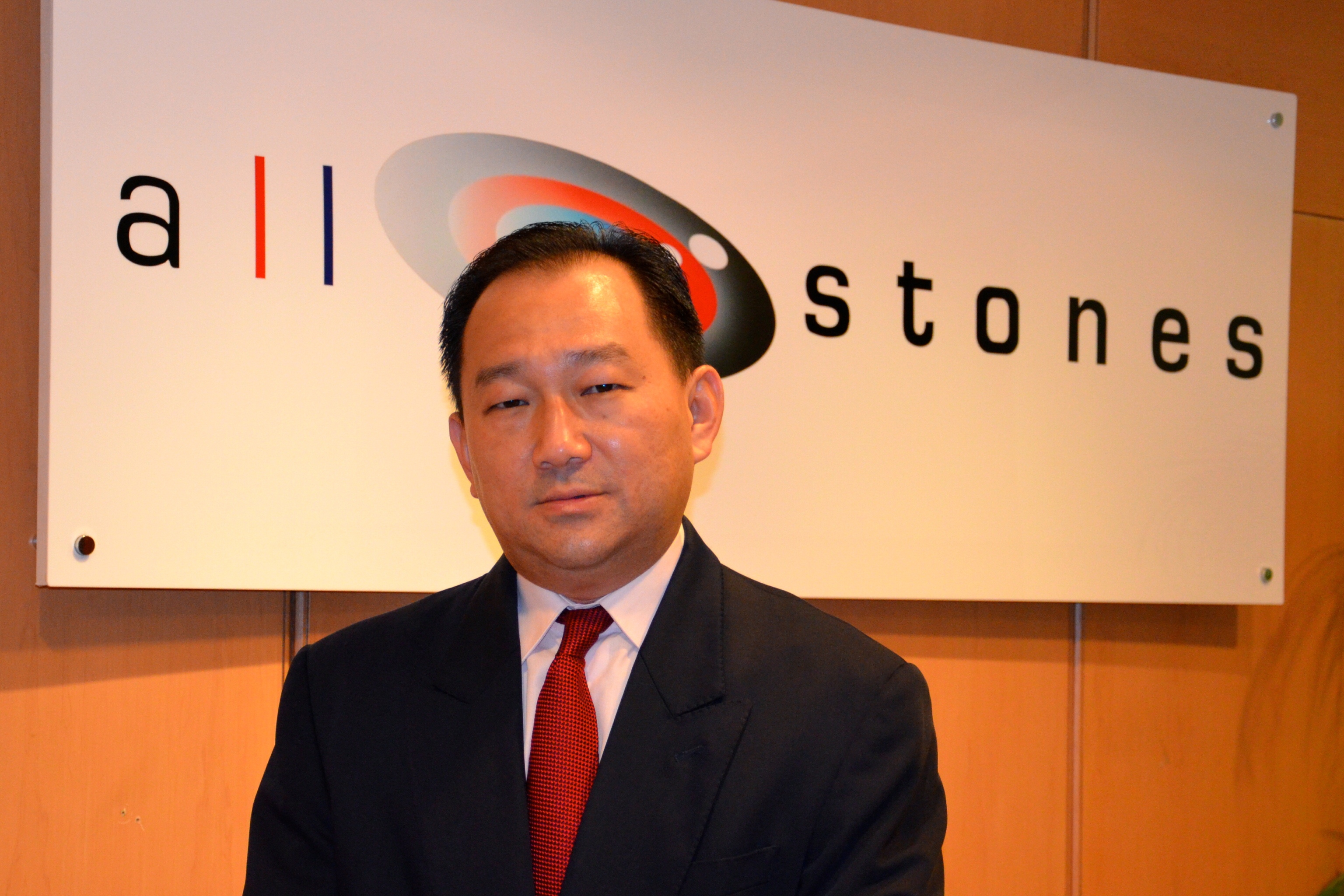
K.H. Sim
“Investment options in Malaysia remain somewhat limited. Historically, our property market has been a good investment, if one buys at the right time at the right price. Most blue chip stocks appear to be fully priced while an interest rate increase has dampened bond prices,” said KH Sim chairman of Allstone Group Asia, a property development and investment company.
As for property, the government had implemented several curbs and cooling off measures since last year and that has gradually taken effect.
For example, it raised RPGT (real property gains tax), tightened lending, put a stop to DIBS (developers’ interest bearing scheme), limited bulk purchases and Bank Negara recently raised interest rates.
 The upside from the curbs is that there has been a respite from the rampant speculative buying that drove property prices up, especially residential homes in city centres such as KL, Johor Bahru and Penang.
Previously, property speculators or “flippers” were blamed for artificially inflating property prices beyond the means of average wage earners.
Problems getting financing
However, there is also a downside — the credit tightening that accompanied the market cooling down has also affected some genuine investors and homebuyers.
Although prices are apparently not rising as sky high as in previous years, affordability of homes is still a raging issue. Many property industry observers feel that this is a major problem that still needs attention, despite the recent slew of government initiatives.
“Property investors have started to become cautious, with many buyers unable to obtain end financing facilities. Even though there is an oversupply in certain segments, prices have not gone down to a level that warrants interest from affordable homes buyers,” said Sim.

Chang Kim Loong
Another trend in the market is that due to scarcity of prime land, property development in areas outside major urban centres have also experienced spikes in prices.
According to Chang Kim Loong, honorary secretary-general of the National House Buyers Association (HBA), despite the perceived notion of a market slowdown, prices are still creeping up even in areas outside the city centre.
“New intermediate double storey link houses even at places as far as Semenyih is already at RM600,000 and above. Recently a prominent developer launched an intermediate double storey link in Kajang starting at RM740,000 (average price was closer to RM820,000 and above) and was sold out in three days,” said Chang to KiniBiz.
Homeless generation?
Based on a HBA survey, new condominiums measuring about 700 square feet in Kajang are already priced starting from RM290,000 with an average 1,000 square feet costing above RM400,000. Chang cautions that this could lead to the beginning of a “homeless generation”.
“After the MRT (mass rapid transit) to Kajang is completed, it is envisaged that the prices of new properties in Kajang and Semenyih will even increase further. What hope is there for young people or single parents earning from RM2,000 to RM3,000 a month when they can’t even afford to buy an apartment as far away as Kajang?” said Chang.
Despite scepticism of some industry players, the launching of smaller residential units at high prices per square foot (psf) still remains popular among property developers.
Leong Hoy Kum, Mah Sing Group Bhd’s group managing director and chief executive, expects strong demand to persist for smaller units such as serviced apartments from 500 square feet.
“Landed properties with built up from 1,000 square feet priced below RM1 million will do well this year as their practical sizes capture the needs of young families,” said Leong to KiniBiz.
Iskandar’s glut
Property developments in the Iskandar Malaysia region in Johor, which was dubbed one of the property hotspots in Malaysia, have also been hit by the government clamp down on speculators amid worries of an upcoming glut.

Princess Cove, Johor Bharu
Where launches in Iskandar used to sell out fast, sales this year recently have reportedly dipped by as much as 30%. Huge property developments by developers from China such as Guangzhou R&F and Country Garden have also raised the spectre of a potential oversupply.
Another recent development down south that could further dampen the property market is the increase in CIQ (customs, immigration and quarantine) toll charges and VEP (vehicle entry permit) fees by both the Malaysia and Singapore government. Other curbs such as foreign purchase limit and levy were also imposed by the state government,
Singaporeans are major property investors in JB, making up an estimated 75% of foreign investments in Iskandar. Any major dip in Singaporean purchases could have a significant impact on the market in JB, thus also affecting decision making for local property investors.
“We need the support from Singapore for Iskandar to flourish, yet we seem to be sending all the opposite signals and actions discouraging them,” said V Sivadas, executive director of PA International Property Consultants. “Perhaps this is good for the market for the long-term.”
A forced cooling down of the market, though bad for developers, may have the desired effect of substantially reducing speculation and more considered purchases, according to V. Sivadas. “The question then would be who can continue to build and hold the properties despite slow sales,” he added.
Good deals from unsold units
So what could investors glean from all this information? More importantly, considering the current market conditions, should they buy property right now or defer their purchases?
Some industry observers feel that for investors who have good cash flow and access to credit, now would be a good time to snap up property to take advantage of the lull before prices go through the roof again in a few years’ time.
Nonetheless, others preach a more prudent approach. “Our advice is to hold on for the moment,” said Sim from Allstones Asia to KiniBiz.
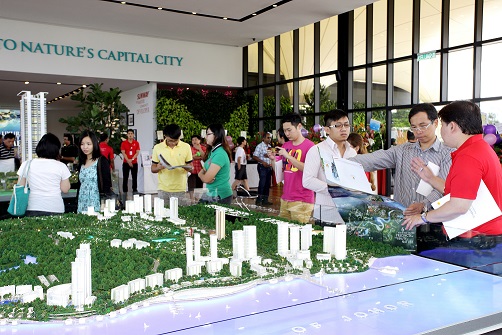 Sim explains that there are still many unsold units in completed projects. Developers who are not well capitalised may release unsold units with better discounts and rebates to improve cash flow and interest servicing.
“Banks may also start to auction off non-performing properties. In fact, this has already started for some residential units in prime areas,” added Sim to KiniBiz. “Developers that price their products competitively with secondary market prices will fare better in their sale rates.”
“Also, developers that want to monetise their unsold units may give investors some good deals. Those who do their homework will benefit the most instead of following the crowd,” said Sim further.
Other than purchasing units in typical residential projects, property investors can also look at several options to diversify their portfolio. For example, shop offices in good locations are still very popular according to James Wong, managing director of VPC Alliance Malaysia Sdn Bhd.
“Student housing located near universities and colleges catering to foreign and outstation students is a new trend,” said Wong to KiniBiz. “In view of the shortage of student housing, capital appreciation and good rentals would be expected.”
“Retail units in a wholesale retail development is another potential investment for investors,” said Wong.
You must be logged in to post a comment.